

Blackout Studio Hire vs DIY Backdrop Setup in London

Updated: Nov 7
A blackout studio can create both deep-black and bright-white images: block ambient light, then shape the look with your backdrop and lighting. That is the key difference between professional blackout studio hire and a DIY black backdrop setup. A backdrop alone will not control light leaking through windows or reflecting off nearby surfaces; a fully blacked-out room gives you a controlled starting point.
A DIY setup can make sense for a small shoot if you already have suitable materials and time to prepare. For a shoot with several looks, however, consistency and setup time matter alongside the hire cost. This guide compares the options for London productions, including how each handles black and white images, what affects the overall cost, and how to plan booking time around setup.
Table of Contents
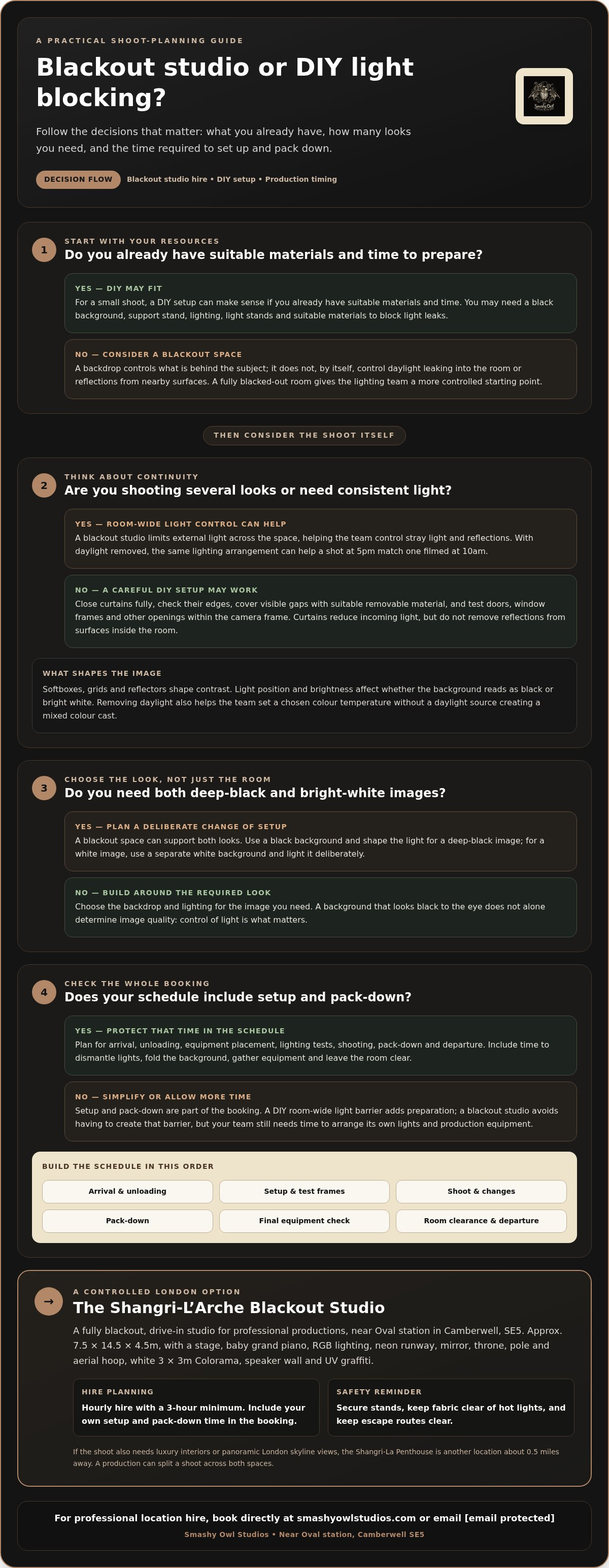
Professional blackout studio versus DIY light blocking
A blackout studio controls light across the room, while a DIY backdrop mainly controls what sits behind the subject. That distinction affects reflections, consistency between shots and the effort required to create black or white images.
Blocking Light with Curtains and Seals
Blackout curtains or blinds block daylight at windows, while covering gaps around their edges helps reduce light leaks. Even a bright strip from a curtain gap can show on a black background or add unwanted light to the subject.
For a DIY setup, close the curtains fully, check their edges and cover visible gaps with suitable removable material. Test the door, window frames and other openings in a camera frame. Curtains can reduce incoming light, but they do not eliminate reflections from surfaces inside the room.
Studio Construction and Light Control
A blackout studio limits external light across walls, ceiling and sometimes floor surfaces, giving the lighting team control over the scene. With daylight removed, a shot at 5pm can match one filmed at 10am when the production uses the same lighting arrangement.
Consistent lighting helps across takes, especially for music videos or projects that require precise changes. Plan the setup before filming: softboxes, grids and reflectors shape contrast, while a light’s position and brightness determine whether the background appears black or bright white.
Colour temperature matters too. Daylight from a window and a lamp balanced differently can create mixed colour casts. A blackout space removes the daylight source, allowing the team to set a chosen colour temperature and maintain it between shots.
For electrical safety, use equipment as intended, secure stands and keep fabric clear of hot lights. According to The National Archives, the Electricity at Work Regulations in Great Britain date from 1989. Treat fire precautions as part of setup: keep escape routes clear and avoid placing curtains against lighting equipment.
Comparing Image Quality and DIY Requirements
Image quality depends on controlling light, not simply on whether a backdrop looks black to the eye. A blackout studio reduces stray light and reflections; a DIY setup can achieve similar control if the curtains, seals, backdrop and lighting are arranged carefully.
A DIY black backdrop photography setup typically needs a black background, support stand, lighting, light stands and materials to block light leaks. Softboxes shape the subject’s light, while reflectors can lift shadows. For white images, use a separate white background and light it deliberately rather than relying on the black backdrop.
DIY costs in the UK depend on what you already own, the quality of the materials and whether you will reuse the setup. Factor in curtains, seals, backdrop support and lighting. Buying only the missing items can cost less than replacing a complete kit.
The space you need depends on the widest frame, the distance between subject and background, and where the stands must go. Ceiling height affects how overhead lights can be positioned. Measure the camera frame and allow room for the subject, backdrop and lights before choosing a DIY location.
Booking durations and time for setup and pack-down
Plan the booking around the whole production, not just the time spent filming. Allow for access, unloading, setup, test frames, the shoot, pack-down and clearing the room. Creating a camera-ready set takes time, even if the final sequence is brief.
Separate shoot time from setup time
Write a schedule before confirming a space: arrival, equipment placement, lighting tests, shooting, pack-down and departure. This makes less obvious tasks easier to spot. A portrait session, for example, needs time to position the background and check the lights, while a music video may involve repeated changes between performance setups.
Include the work your team needs to complete before the subject arrives. Position stands, prepare reflectors and check that windows are covered before shooting starts. If a test frame reveals unwanted shadows, allow time to adjust the lights rather than cutting into the planned session.
Allow for pack-down and room clearance
Pack-down is part of the booking, not an optional task after the shoot. Allow time to switch off and dismantle lights, fold the background, gather personal equipment and leave the room clear. Even if the team uses the final minutes for one more take, it will still need time to restore the space.
Assign one person to check the camera area, corners and equipment positions before departure. A final sweep catches forgotten stands, cables and reflectors. For a shoot with several looks, record each setup as you go to make dismantling easier and avoid a last-minute search for equipment.
Match the booking to production complexity
A compact headshot session with one background involves fewer changes than a brand shoot switching between product, portrait and interview setups. List each look and its lighting changes, then estimate the work involved in each transition. More camera positions and background changes mean the schedule needs more time.
For a DIY setup, allow time to hang curtains, cover light gaps and test the result. If the room has several windows, check each one before setting up the camera. A blackout studio avoids creating that room-wide barrier, but your crew still needs time to arrange its own lights and production equipment.
Keep the schedule realistic by protecting setup and pack-down time first, then assigning the remaining booking to filming or photography. If a controlled London space suits your plan, discuss your shoot timings with the studio team.
Studio hire costs, equipment and set-up time
Compare the full production cost, not just the backdrop or room rate. DIY shifts spending towards materials, lighting, storage and crew time; studio hire puts more of the budget towards the space and its facilities. The better fit depends on how often you shoot, the brief and the equipment you already have. This professional blackout studio hire vs DIY black backdrop setup comparison is most useful when you count preparation time too.
Compare the whole cost, not one item
Start by listing what your team already owns. A photographer with reusable stands and lights faces a different DIY calculation from a crew buying curtains, supports and blackout materials for a single shoot. For repeat projects, include transport, storage and replacement materials in your estimate.
For studio hire, check the current rates on the studio’s website and compare them with your planned booking duration. A specialist blackout space may cost more than another type of studio, but the useful comparison is the complete production budget. Include the time spent setting up and removing a DIY system, especially for a shoot with several looks. A professional blackout studio hire vs DIY black backdrop setup decision should account for both spending and crew hours.
Choose equipment around the image
A black-background setup may use a backdrop, support stands and lighting that controls spill. For a bright-white frame, light the background deliberately; the same kit may need repositioning between looks. Softboxes shape the light, while grids help direct it. Reflectors can fill shadows without adding another powered light.
Before buying, list each item by purpose: background, support, light shaping and power. Mark what you can borrow, reuse or substitute. This helps avoid buying a complete kit when the project needs only one missing item. Check that the support fits your room and camera framing.
Account for setting up and ambient conditions
DIY materials can reduce ambient daylight, but a backdrop alone will not control every reflective surface. Setup may involve hanging fabric, securing supports and testing how the background colour looks under your lights. Stray light can make a black surface look grey; uneven lighting can make a white background look patchy.
Plan a test frame before the main shoot. Review the exposure, background tone and shadow detail on the camera display, then adjust the light position or output. This helps catch colour casts and uneven backgrounds before the subject arrives.
To choose between hire and DIY, compare the equipment you already have, the looks you need and the time your team can spare. A recurring setup may justify reusable materials, while a one-off production may suit a ready-made space.
Blackout studio hire in London
For London productions, a blackout studio is useful when changing daylight would disrupt continuity. It provides a controlled setting for portraits, interviews, product shots or filmed performances. Decide whether the brief calls for natural light, controlled lighting or both. A naturally lit room can suit a soft, open look; a blackout room suits scenes shaped by deliberate lighting.
Match the room to the shot list
Before choosing a location, list the required shots and group them by lighting style. A portrait with soft, even light needs a different setup from a silhouette or dramatic profile. If the same subject appears in several scenes, controlled conditions can make it easier to match them, particularly when the edit cuts between close-ups and wider frames.
Consider the camera position and background for each setup too. A close frame may need less room than a full-length portrait, while a moving shot needs clear space around the subject. Sketch the camera, lights and subject on a simple floor plan to see whether your planned techniques and effects will fit.
Choose control or changing daylight
Natural light can create attractive variation, but cloud cover changes its strength and direction. A blackout environment removes that changing source, allowing the crew to build the look with its own lights. For a fashion sequence, this can help keep the background consistent across takes. For a window-lit interview, daylight may be an essential part of the image.
A black backdrop and a blackout room solve different problems. The backdrop gives the camera a dark surface; the room limits ambient light and reflections around it. Similarly, a white background needs deliberate lighting to appear bright and even. Decide whether the brief needs a particular background, room-wide light control or both.
Plan the London production around access
In London, location choice also affects how the team moves people and equipment. Consider transport routes, load-in needs and scene order before preparing the call sheet. If a production combines natural-light portraits with controlled effects, grouping shots by location and lighting can reduce repeated setup changes.
For a blackout shoot near Oval station in Camberwell, SE5, prepare a concise brief covering the subject, framing, background, lighting approach and intended effects. That gives the location team a clear picture of the production’s needs. Use the brief to decide whether a blackout room offers more value than building light control from scratch.
Smashy Owl Studios: Photo studio hire london
Smashy Owl Studios offers a practical next step when you need reliable light control without building a DIY blackout setup. The fully blackout Arch is available for photo studio hire, filming, music videos and content creation near Oval station in Camberwell, SE5.
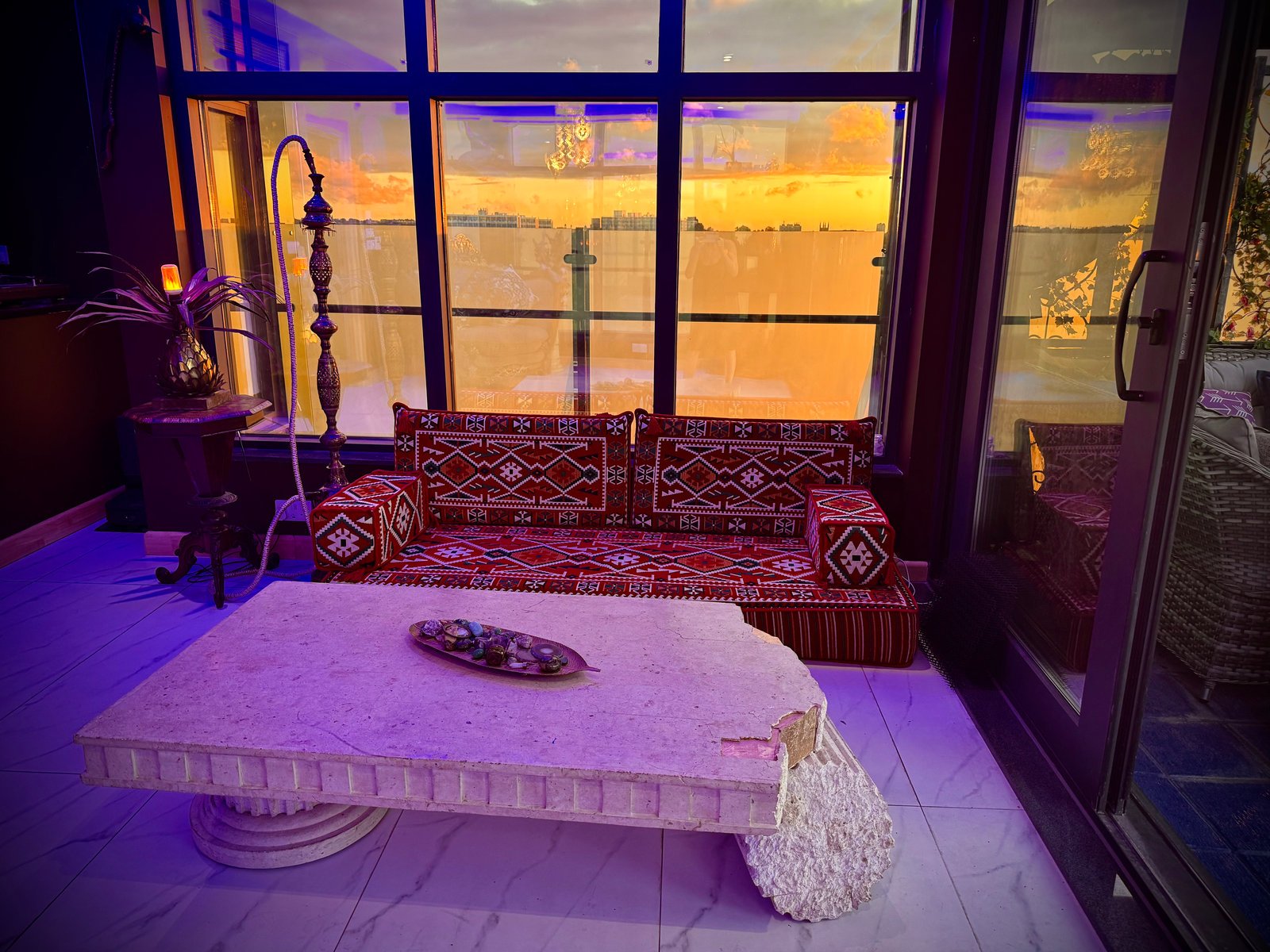
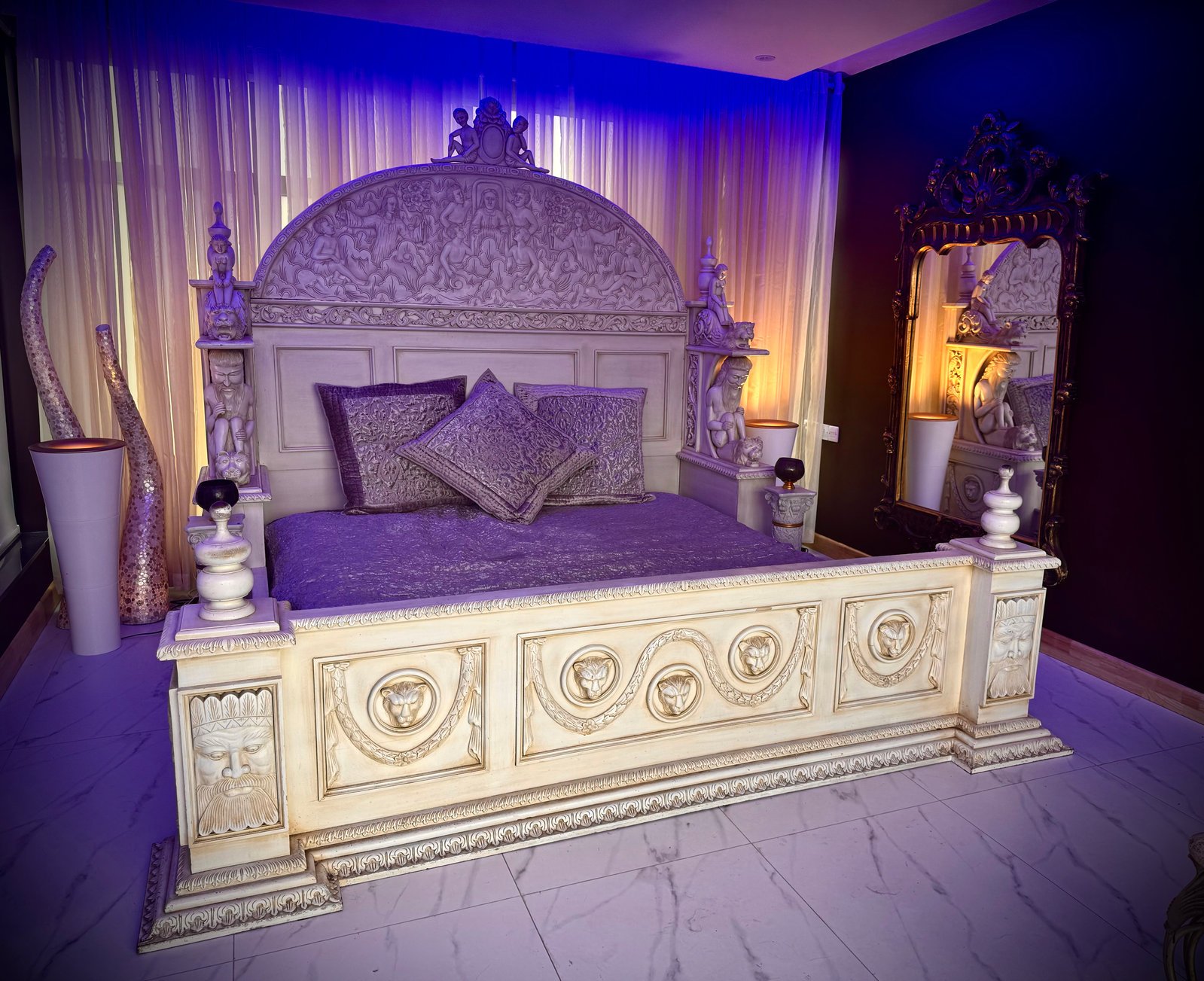
Its drive-in access can simplify bringing production vehicles into the space, while the blackout environment gives your team control over the lighting. Hourly hire is available, so you can plan a focused shoot without committing to a full day. You can also split a production between the Arch and the nearby penthouse when your brief calls for contrasting looks.
Explore the spaces at smashyowlstudios.com or email bookings@smashyowlstudios.com to discuss your shoot.
Shape your next shoot around the look you want
Make the next step a creative decision, not just a lighting one. Before booking, choose the visual priority for each scene: a clean white background, rich black detail or a transition between contrasting looks. Share the plan with your team so the location, equipment and schedule support the same direction.
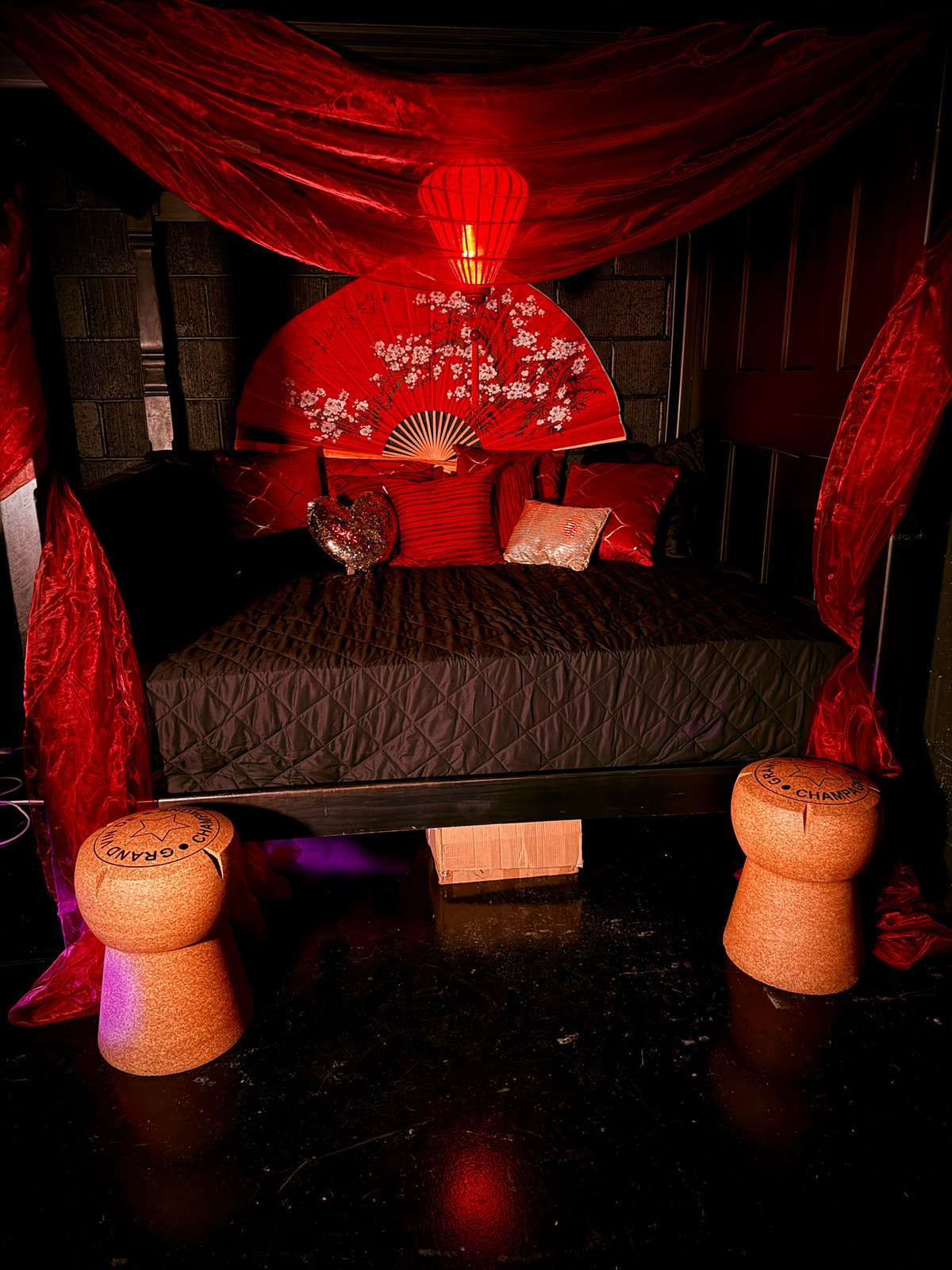
The choice between professional blackout studio hire and a DIY black backdrop setup depends on how much control your production needs and how much preparation your team wants to take on. If a purpose-built space suits the brief, Smashy Owl Studios offers photo studio hire, film location hire and music video location hire in London. Shangri-L’Arche, also known as The Arch, is a fully blackout studio with a golden throne, neon runway, working baby-grand piano, aerial hoop and optional drive-in vehicle access.
Bring your shot list and intended look into the planning conversation. A clear creative direction helps you choose a space where your team can focus on making the work.
Your next strong image starts with a space that supports your vision.
Frequently Asked Questions
Can the same room shoot bright white as well as black?
Yes, with the right backdrop and lighting for each setup. If a sequence needs both looks, note the camera settings and light positions for each version. This gives the team a useful reference for recreating a frame later. Check that clothing, reflective products and other details work with both treatments before the subject arrives.
Can I rent a blackout studio for small-scale projects?
Yes. A compact production can use a hired space too. A solo creator might record an interview, for example, or a small brand team might capture close-up product details. Bring a concise shot list and decide who will operate the camera and manage the setup. Smashy Owl Studios hires out studio space, so clients arrange their own production team and creative services.
What does professional blackout studio hire include in the UK?
Studio hire gives you access to the booked space for your production. At Smashy Owl Studios, lighting equipment shown in the Arch studio photographs is included unless stated otherwise. You can also bring your own props, equipment and lighting. The hire is for the location, not a photography or filming service, so arrange your own creative team and production needs.
How much does blackout studio hire cost per hour or day in the UK?
The cost depends on the studio, booking time and production requirements. Rates vary between locations and time slots, so use Smashy Owl Studios’ current rates when planning. For a bespoke production schedule, account for the access time your team needs and any separate arrangements, such as optional vehicle access.
What hidden costs apply to studio hire, such as lighting, overtime and insurance?
Do not assume overtime or insurance is included, or that either carries an extra charge. Read the booking terms for the space and dates you are considering. Keep your production expenses distinct from location hire, including travel, crew, props and any equipment you choose to bring. This gives you a clearer budget without treating every possible cost as a studio fee.
When is hiring a professional blackout studio better than setting up at home?
Studio hire can be a practical choice when a home room cannot accommodate the production’s people, equipment or working layout. A brand team, for instance, may need clear space for handling products, operating the camera and reviewing shots between takes. A dedicated location can also keep a professional shoot separate from household routines, which helps when several collaborators need to work together.
Comments