

Controlled studio environment vs unpredictable British weather filming

Updated: Nov 7
A controlled studio environment is the more dependable choice when consistent light, sound and timing matter. Filming in unpredictable British weather can deliver an authentic outdoor atmosphere, but rain, wind and changing daylight may disrupt the plan. The decision comes down to what the scene needs most: creative control or a real-world setting.
Outdoor filming has a distinctive look and feel, making it the right choice when the location is central to the story. But shifting conditions can make continuity harder and put the schedule at risk. A studio removes much of that weather uncertainty, though it cannot recreate every outdoor environment.
This guide compares the two approaches across weather control, production planning and sound, then considers practical indoor alternatives for London shoots. You’ll find a clearer way to match the setting to your creative priorities and keep production moving when the forecast changes.
Table of Contents
Controlled studio lighting, sound and weather conditions
Studio filming lets the production team shape lighting, sound and background without weather or daylight disrupting each take. Outdoors, cloud cover, wind and passing traffic can alter the image or soundtrack between shots. The choice between a controlled studio environment and filming in unpredictable British weather depends on whether consistent conditions or authentic location atmosphere matters most.
In a controlled studio environment, set the lighting positions and intensity, then keep them consistent from shot to shot. Blackout conditions remove changing natural light from the equation, while a carefully chosen background keeps unwanted distractions out of frame. These controls are useful for matching close-ups, product details or repeated takes. They do not create an authentic outdoor setting, so choose the space that fits the visual story.
Outdoor light can shift as clouds pass or the sun moves, changing shadows and colour across a scene. That makes continuity harder, particularly when a sequence is filmed in separate takes. Wind can affect microphones and move light stands or loose materials, while rain can make surfaces slippery and expose equipment to moisture. Productions filming in England must comply with the Health and Safety at Work Act 1974, according to UK legislation. Productions filming in England must comply with the Management of Health and Safety at Work Regulations 1999, according to UK legislation.
Sound needs its own plan. A studio’s controlled surroundings can help limit interruptions, while a location may bring traffic, voices, wind or other ambient sounds that suit the scene. For outdoor dialogue, fit a windscreen to the microphone and place a tie microphone close to the speaker. Scout for noise sources and, where possible, record during quieter periods. Portable acoustic panels can help shield a recording area; capturing both focused dialogue and ambient sound gives editors more options later.
Match outdoor sound equipment to the conditions: protect microphones and recorders from rain, secure cables and monitor wind noise during each take. A windscreen reduces wind impact, but it will not remove traffic or nearby activity. At a busy street location, record a short test and listen back for interference before filming dialogue. In a studio, test the room sound and microphone placement before the first take, too. These checks help you decide whether a controlled studio environment or filming in unpredictable British weather better suits the scene.
Choose a studio when consistent lighting, controlled sound and repeatable takes matter most. Film outdoors when natural light or real-world ambience is essential, and plan for wind, noise and changing conditions.
Weather forecasts and historical data in production planning
For outdoor filming in the UK, season and region affect daylight, rain, wind and ground conditions. Coastal or exposed locations can be windier than sheltered urban streets, while changing daylight limits the time available for matching shots. For a London production, plan around the specific location and scene rather than treating a national forecast as an exact picture of conditions on site.
Use a specialised forecast regularly, then connect each update to a practical decision: whether to film outside, move an interior scene forward, or protect equipment. Modern forecasting tools can provide hourly predictions up to 15 days in advance, giving production teams a planning window, not certainty about conditions on the shoot day. Keep a weather-dependent shot list separate from scenes that can be filmed indoors.
Historical weather data can add context when choosing dates or scouting locations. Compare past patterns for the intended season with the forecast, and consider how rain, wind or low temperatures could affect access, surfaces and continuity. Build buffer days into the schedule where possible. If conditions worsen, film a prepared interior scene and save outdoor shots for a more suitable window.
Past productions show how plans can change. Hurricane Iniki, a Category 4 hurricane, affected the filming of Jurassic Park in Hawaii; production moved to a Los Angeles studio. For The Revenant, the production moved to southern Argentina to find suitable snow conditions. These examples illustrate two distinct responses: relocate the work or change the setting. For a London shoot, decide in advance which scenes can move indoors and which depend on a particular exterior.
Include traffic and congestion in your weather plan. Rain can slow equipment moves, while busy roads or restricted access can shorten the filming window. Scout the route from vehicle drop-off to camera position, identify an alternative route for equipment and allow realistic setup time. A forecast only helps if the crew can act on it.
For simulated outdoor scenes, virtual production can combine a filmed subject with a digitally created background. This gives you control over the backdrop, but the creative team needs to plan camera framing, movement and lighting together. It can suit scenes where a real exterior is impractical, but it will not provide genuine interaction with the weather, surfaces or surroundings.
Use green screen or compositing only when the intended background can be created convincingly in post-production. For atmospheric effects such as mist or rain, assess the forecast before filming and include the effect in the production’s safety planning. This helps the team coordinate the visual result with site conditions and the schedule.
When an indoor fallback would protect a weather-sensitive shoot, discuss a studio contingency as part of the production plan.
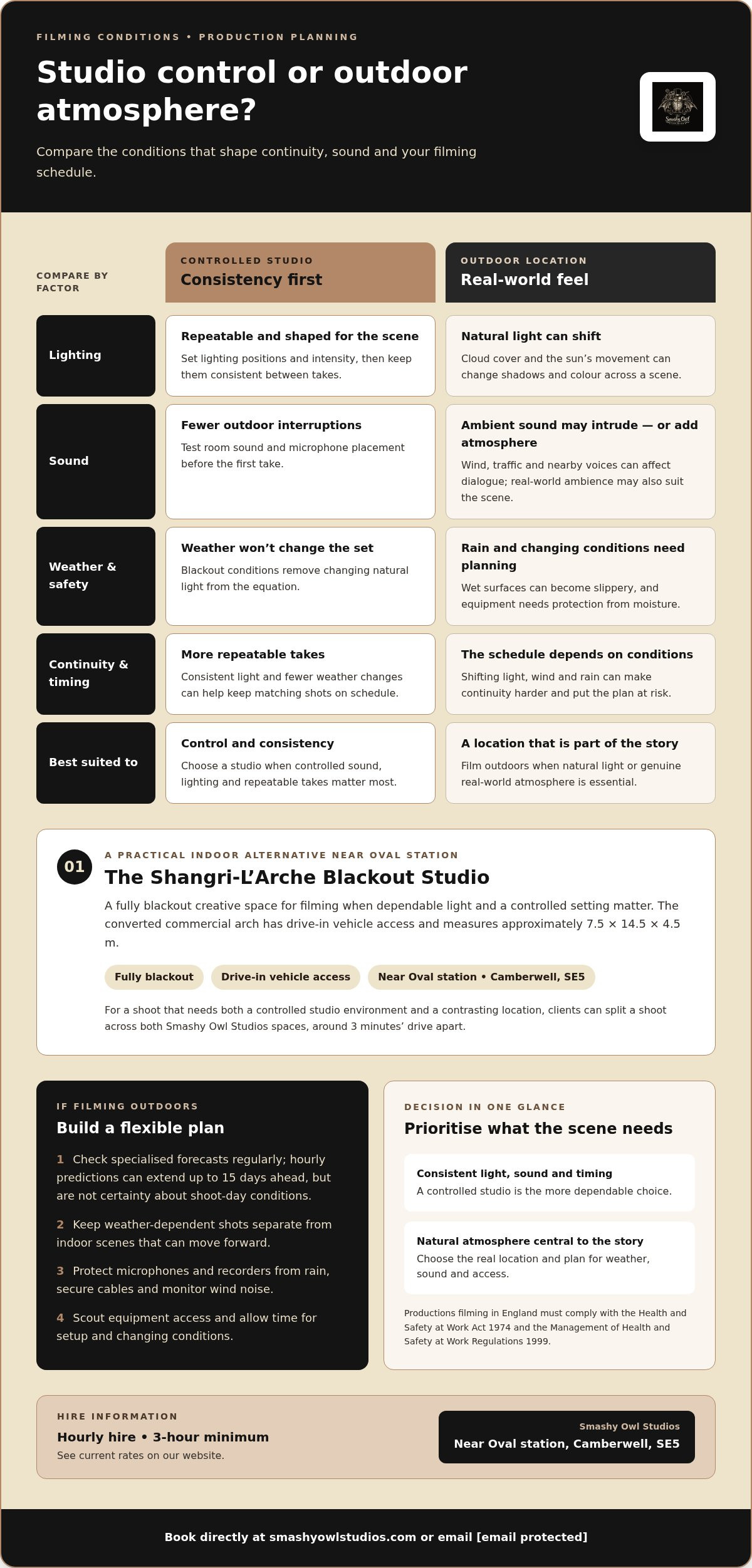
What is the Difference Between Studio and Location Filming?
A studio provides a prepared space for filming, while a real location brings its own surroundings and practical constraints. Weather, access, permissions and the scene’s need for authenticity all influence the decision.
Studio filming
A studio gives the production team a consistent base for coordinating people, equipment and scene changes. The crew can work together without public traffic or changing weather affecting the filming area. Set construction can add costs, and studio hire is another budget item, but a suitable prepared background may reduce travel and setup demands. Choose this option when the scene can be created indoors and schedule control matters.
Location filming
Location filming uses a real environment, such as a street, shop or landscape, to add texture a constructed set may not reproduce. Natural light and ambient activity can strengthen realism, but clouds, rain and wind may disrupt continuity. Scouting helps identify noise, access routes and suitable equipment positions. Before filming in exposed conditions, plan waterproof covers, sheltered areas and an alternative route for equipment.
For outdoor shoots in the UK, permissions depend on the site. Filming may require agreement from a council, local business or private owner, as well as compliance with site rules. Public-street filming is generally free under UK common law when it does not obstruct others’ passage or breach other legal requirements. Allow time for authorisations, as permits can take longer than expected.
Costs depend on what the scene needs. A studio may involve space hire and set construction, while a real location may reduce set-building costs if it already suits the script. However, scouting, permissions, transport, equipment protection and extra setup can all affect the overall production budget. Compare the full requirements, not just the hire or build cost.
Weatherproofing starts with a plan for the specific location. Protect cameras and electronic equipment with waterproof covers, and provide shade or shelter in hot conditions. Check the forecast before using atmospheric effects such as wet-downs, snow, mist or rain. Mark out a sheltered holding area and agree how the crew will communicate a change of plan, so a shower does not leave people or equipment without a clear next step.
Authenticity can come from small details: reflections in a shopfront, the echo of a stairwell or the changing activity of a street. These details can also bring interruptions. During location scouting, note likely noise sources and where the crew can stand without blocking access. A studio supports close collaboration in one controlled space; on location, clear roles and agreed meeting points help the team adapt together.
In short, use a studio when schedule, coordination and a repeatable setting matter most. Choose a location when its real atmosphere is essential and the team can plan for access, permissions and weather.
Indoor alternatives and weather contingency plans
Weather delays can push scenes beyond booked time, disrupt crew and transport schedules, and add costs through rescheduling or extended hire. A prepared indoor alternative and a flexible scene order can help protect the schedule.
Indoor alternatives
An indoor alternative is a preselected space or scene the team can use when an exterior becomes impractical. It will not reproduce every outdoor detail, but it can keep filming moving and the production process predictable. Choose scenes that work without the exterior’s distinctive background, such as dialogue, product close-ups or inserts.
Before filming, divide the shot list into weather-dependent and indoor-ready scenes. For example, a scripted street sequence may rely on wet pavement, while an interview can move indoors without changing its visual purpose. Keep props, wardrobe and shot references for both options together, so moving indoors does not create continuity problems later.
Check whether the indoor scene needs different lighting, sound or room layout. Moving from a wide exterior to a close interior may change eyelines, costume details and the direction of movement. Note those choices in the continuity record, then capture reference images of wardrobe and props before switching scenes.
Weather contingency planning
A contingency plan turns forecast changes into clear production decisions. Review specialised forecasts regularly, then set a decision point for each exterior: proceed, protect equipment, or switch scenes. Forecasts can offer hourly predictions up to 15 days ahead, but the crew still needs a practical fallback for conditions that change nearer filming.
Arrange the shot list so indoor scenes can move forward without breaking narrative continuity. If a later scene shows a character arriving at a location, film the interior that follows first, then return to the exterior when conditions improve. Record the planned sequence and any costume, prop or lighting changes so editors can maintain the story’s visual logic.
Make responsibilities clear. Decide who communicates a schedule change, who updates the crew and how equipment will be moved. For a London street shoot, identify an indoor fallback and an alternative route for camera cases before rain affects access. Keep the contact list current and share revised call times promptly.
Build buffer time around weather-sensitive scenes and prioritise interiors during unsettled conditions. Protect cameras with waterproof covers, and plan sheltered areas for people and equipment. If the exterior remains essential, reassess the location-specific risks alongside the visual requirements before resuming.
A strong contingency plan does not remove weather from the production process. It gives the team a clear next step, keeps the creative vision in view and makes scene changes easier to coordinate.
Smashy Owl Studios: Book Two Studios for One Shoot
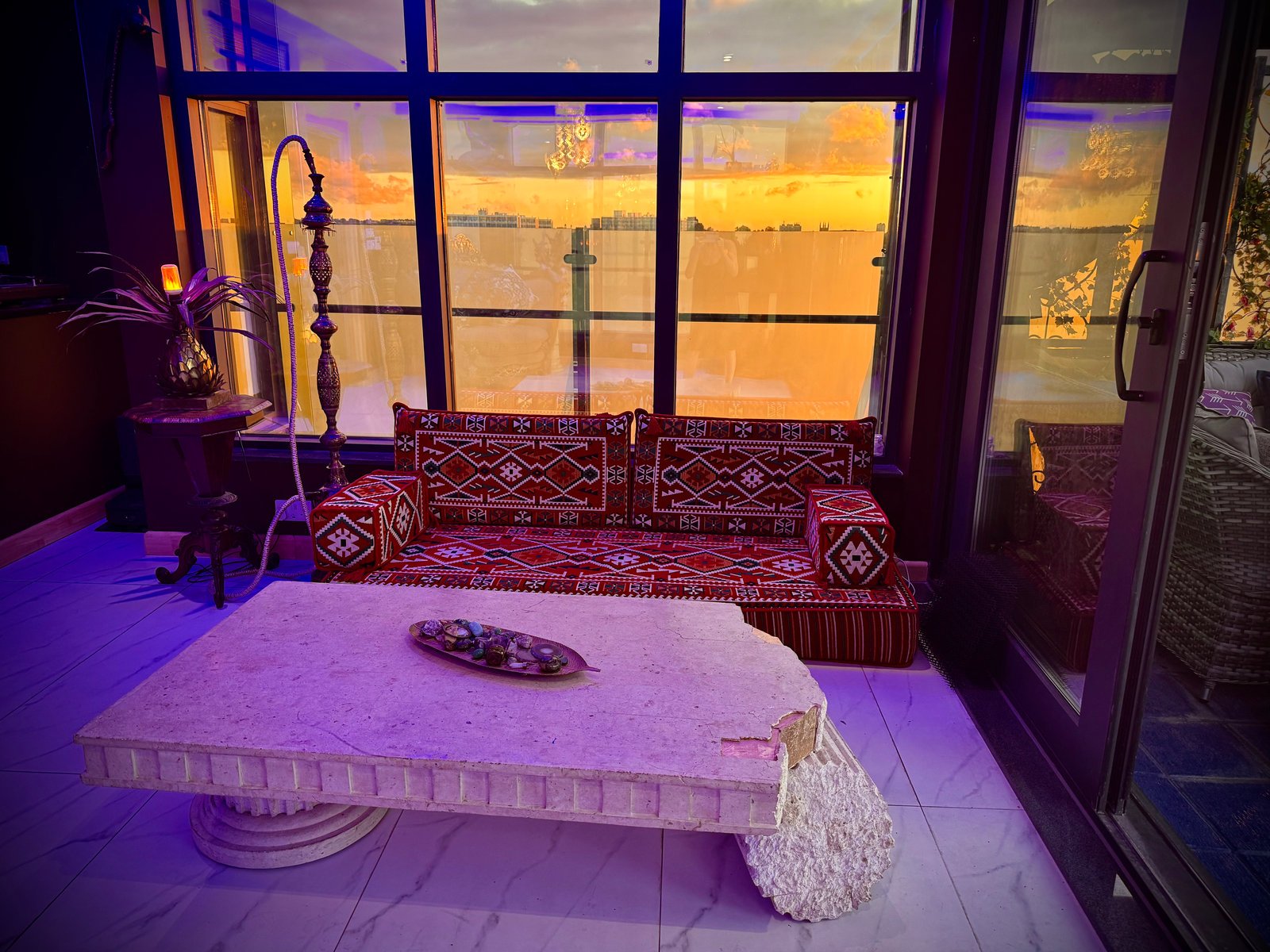
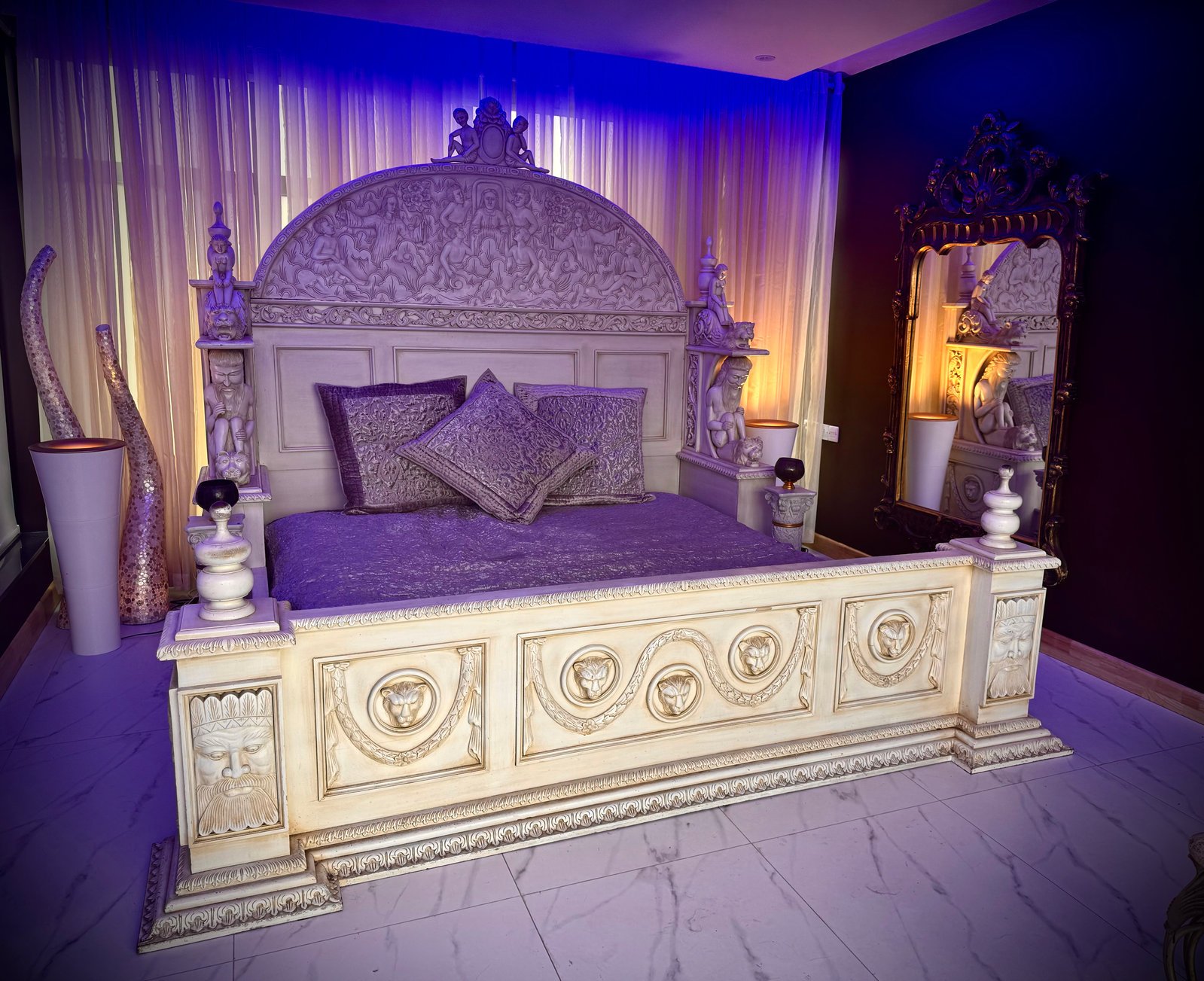
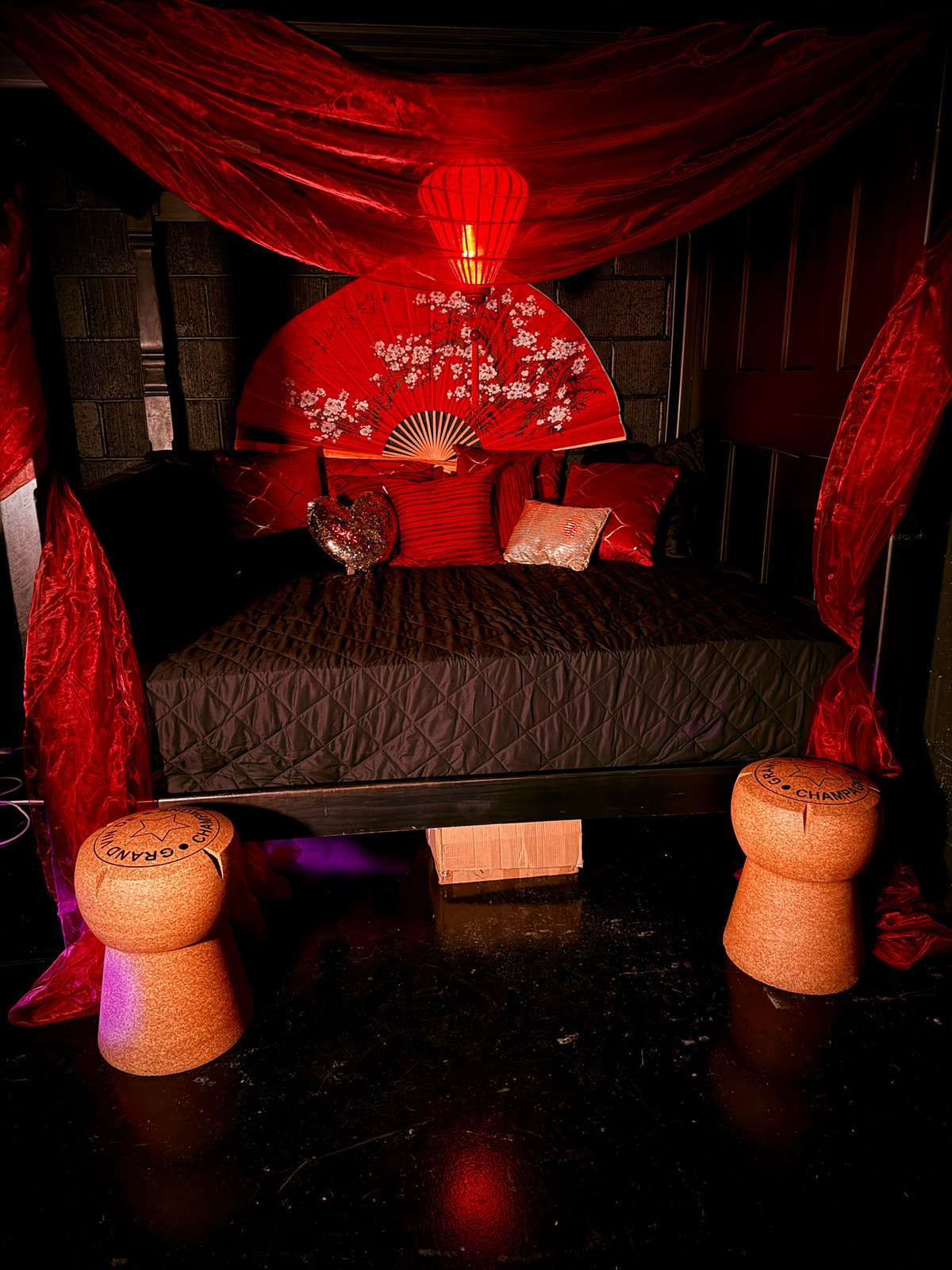
Smashy Owl Studios offers two distinct production spaces near Oval station in Camberwell, SE5, about three minutes’ drive apart. The Shangri-La Penthouse pairs luxury interiors with a rooftop hot tub and panoramic London skyline views. The Shangri-L’Arche Blackout Studio is a converted commercial archway with full blackout, drive-in vehicle access, a stage, baby grand piano, RGB lighting, neon runway, mirror, throne, pole, aerial hoop, white 3x3m Colorama, speaker wall and UV graffiti. Smoke and haze effects are allowed in the Arch only.
Book both studios for one shoot to create contrasting looks in the same production schedule. Hire is available by the hour, with no minimum booking rather than a full-day minimum. You bring your own creative team.
To book, visit smashyowlstudios.com or email bookings@smashyowlstudios.com.
Shape your next shoot around the setting
Let the creative idea guide the location decision. A controlled studio environment suits work that depends on consistent conditions; filming in unpredictable British weather may be the better fit when the real setting is part of the visual story. For contrasting looks, plan scenes around the spaces rather than forcing one setting to do everything.
Smashy Owl Studios offers photo studio hire, film location hire and music video locations in London. Bring your own creative team and choose the space that fits the production. You can also plan a multi-location shoot around different visual needs, using the blackout studio as an indoor option for weather-sensitive scenes.
Choose a setting that supports your vision, then get in touch with Smashy Owl Studios to plan your London production.
Frequently Asked Questions
What are the risks and challenges of filming outdoors in British weather?
Outdoor filming can be affected by rain, wind, changing light and weather-related access issues. These conditions can disrupt continuity, slow equipment moves and make surfaces more challenging to work on safely. In a dialogue scene, a gust may spoil a take; on a product shoot, cloud cover can change the look between angles. The practical challenge is coordinating people, equipment and scene order as conditions shift through the day.
How much contingency time should UK productions allow for weather delays?
Set contingency time according to the shoot’s dependence on weather, location access and how easily scenes can move indoors. A production with one essential exterior has different needs from a schedule with several weather-flexible scenes. Identify which shots can be rearranged, then build buffer time around those least able to move. Review the forecast during planning and as filming approaches, adjusting the schedule to protect essential shots.
How can film crews protect equipment from rain, wind and cold?
Use waterproof covers for cameras and electronic equipment, and secure stands and cables where wind could move them. Fit microphone windscreens to reduce wind noise, and keep a dry, sheltered place for equipment between takes. In cold conditions, limit unnecessary exposure and monitor how equipment performs as temperatures change. Before each setup, check covers, connections and the route between storage and the filming position.
To book directly, visit smashyowlstudios.com or email bookings@smashyowlstudios.com.
Comments